Author: patyt

  • Waking Up Garden Ghosts

    Waking Up Garden Ghosts

    This essay recounts my experience as a community garden coordinator during the last 6 months. I’d like to thank the Tankstation crew for trusting me with this role and showing me how far teamwork can go: Creating things together with you always warms my heart! 

    [~2k words : 10-minutes read time]

    Last winter, I came back from a two-year hiatus from volunteering at ‘Tankstation,’ a cultural meeting space with the warmest community in Enschede. When Tankstation started, back in 2013, our community had secured an old, abandoned gas station (hence the project’s name) near the city center. As a crew of volunteers, we cared for and loved that space for over 12 years. We’d offer weekly concerts, workshops, art exhibitions, and vegetarian meals. However, by the end of last year, the municipality and a housing corporation started acting on their plans of demolishing that old gas station and erecting a new building that would fit the modern world. ‘Tankstation’ had to move. 

    While the news of having to vacate our old building felt as a shock, the then Tankstation’s board members quickly found us a new place to call home. Having a new location was a relief and an answer to the question of where we would continue to host our community events. But as much as it was a relief, the new location was a big challenge. It is mostly a huge glass house — a greenhouse — vulnerably exposed to the whims of the Dutch weather, and in a residential neighbourhood that’s still not sure how it feels about having a bunch of weirdos doing who knows what inside such an unusual space. 
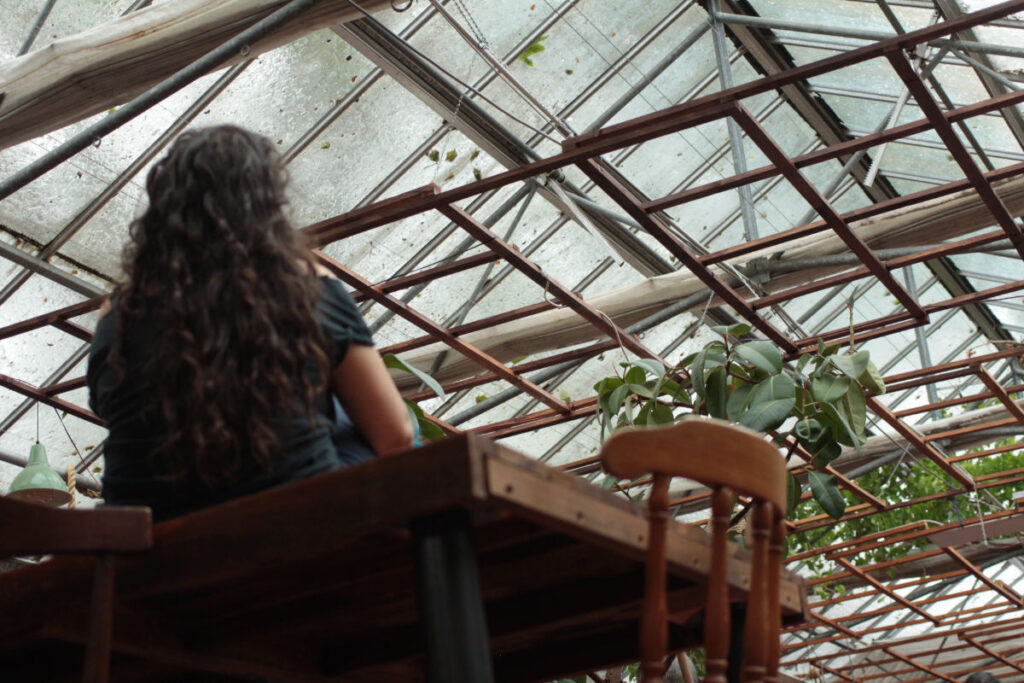
    Yasmin looking at our greenhouse’s roof during a rainy day.

    In the previous months, I had watched from afar the massive amount of work that the crew put into moving Tankstation’s equipment and furniture from the old place to the new one. Thus, once I had submitted the final draft of my PhD dissertation, I put and end to my Tankstation hiatus and decided to check-in with the crew. I was ready to volunteer again and decided to visit the new location right after all the stuff had been moved. 

    It was an afternoon in early January when I walked with curiosity into the massive greenhouse. The air was freezing cold and damp. Even indoors, I could still see my breath. The place was packed with stacked chairs, tables and couches, toolboxes, half-dead plants, amplifiers, stage equipment, and the odd thing here and there. You had to watch your step and make your way through the clutter. I got the sense that I was walking through no man’s land. Crew members cautiously informed me that the whole organization was going through major changes. The move had been exhausting, the build up was a daunting prospect. Here was this huge new location and a massive amount of work ahead of us. No one and everyone was calling the shots.

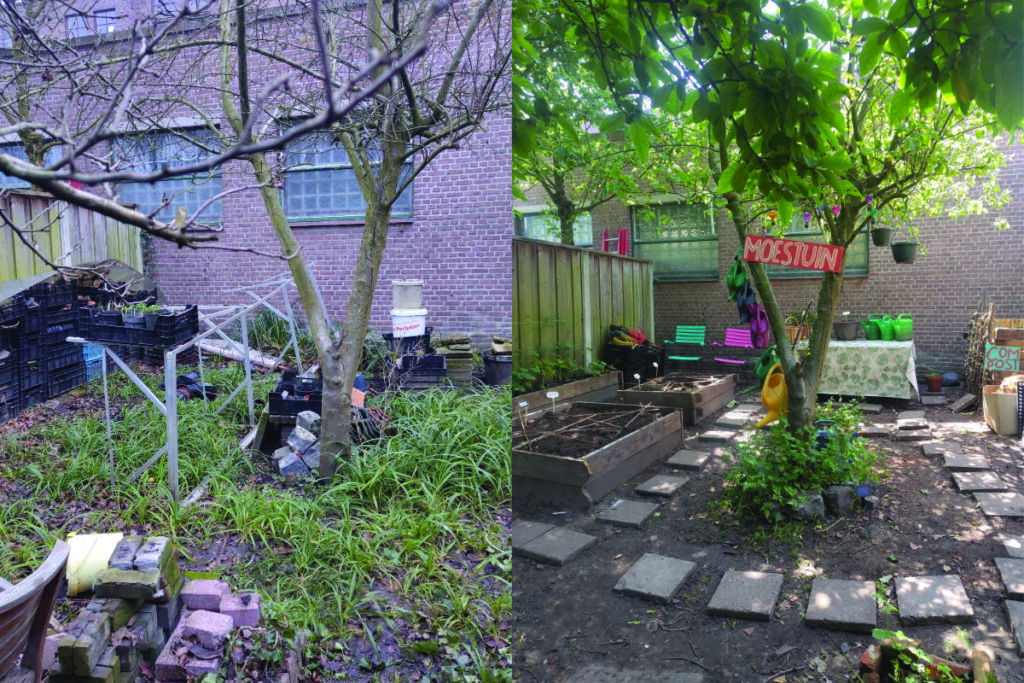
    I noticed a big sliding door to the left of the greenhouse. I pulled hard with both arms to open it and stepped out onto a huge, dormant garden. I remember gasping at the sight and bringing a hand to my mouth. I stood there for a few seconds, taking it all in under the gray, dark sky: dozens of bare trees standing around a paved square covered in old wood planks, bricks, and other building materials. Huge tree branches laying all over the ground, which must have been cut from the trees not too long ago. I saw a myriad of pots placed on unexpected corners, some with leafless young trees, some full of dark soil to the brim with nothing growing in them. There were dozens of worn-out, mouldy wooden chairs at the sides, in no purposeful location, rotting vestiges of what were once wooden-top tables, piles of stone tiles, buckets full of stagnant rainwater, and hundreds of clay and plastic pots stacked all over the garden. 
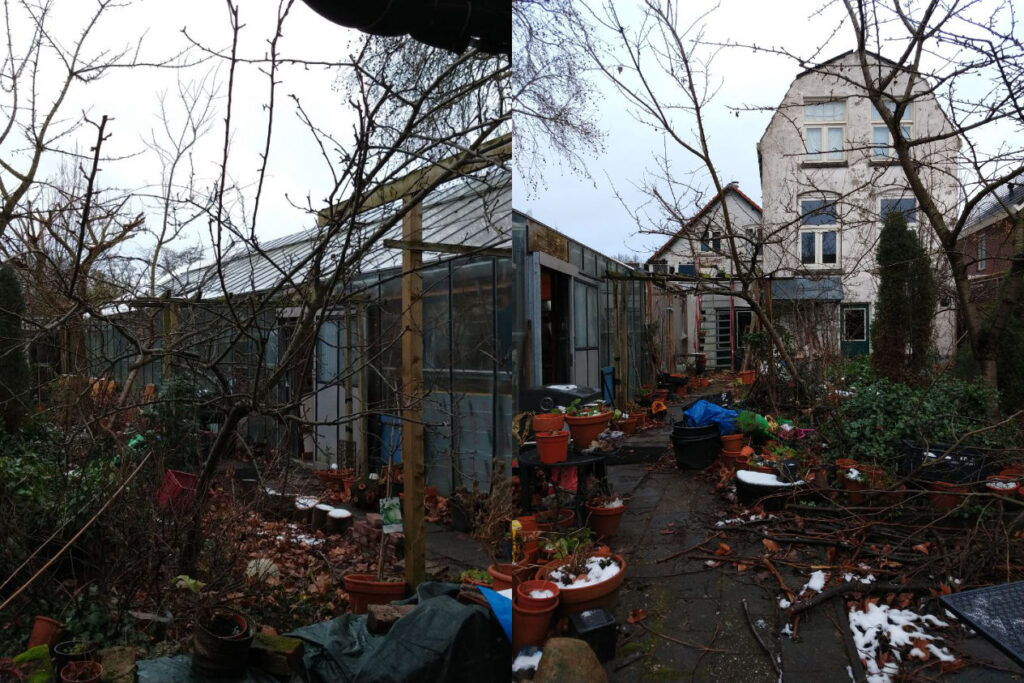
    These pictures of the garden were taken by Iris on a snowy January day

    I went past the paved square and walked through the trees and bushes, noticing where tree trunks and stems came from, feeling the sheer size and complexity of the space. I went around its corners, inquiring with my hand what was covered underneath the overgrown ivy.

    There was certainly a wilderness to it all. The plants must have had the freedom to take over the place for a few years. But there were also the vestiges of years of human work. In the depth and darkness of winter, it felt like garden ghosts were hiding among the decidious trees and bushes; observing, waiting for action.

    I felt my heart expanding within my chest, trying to acommodate this huge gift in it. The space, the trees, the mountains of disorganized materials, the seasons stretching in front of us, the opportunity of dusting off those ghosts and bringing a little paradise back to life.

    Over the next few days, I started showing up consistently at ‘the greenhouse.’ I would walk out of the sliding door and study the garden. I looked at each plant more carefully. I began moving things from one place to another, putting branches on a single pile, stacking tiles, making space, doing a mental inventory of the different materials. I started sketching out a vision. 

    Soon thereafter I met Susanne, a retired ecologist who lived right next door to the greenhouse and who had run an organic plant shop in that same building for many years. I learned that she had been the human hand behind that enchanted garden. Her botanical knowledge of it was astounding. We walked through the space while she identified the trees and bushes, explained the soil composition, and revealed what flowers were sleeping on those pots full of soil. 

    Susanne had to close her plant shop a while ago and hadn’t been able to keep up with the garden during the last years. Now here we were, an inexperienced yet committed crew of volunteers bursting with new ideas. I began asking her opinion on different projects, like raising vegetable beds and herb spirals; pruning trees, or using different materials. She encouraged us to be brave and try things out, to not be afraid of failing. She was also protective of certain species and explained why they needed maintenance and protection. Susanne was the key to uncovering the garden’s hidden treasures and gave us invaluable advice on how to keep it healthy and thriving. 

    After a couple of weeks of studying the space, I came back to the Tankstation crew with a proposal — a drawing on my notebook with a layout for a community garden. The layout included sections for vegetables, herbs, pollinators and wildlife, a romantic hiding spot, and a terrace. The response from the team was so enthusiastic, that I was offered to take on a new position as a ‘garden coordinator.’
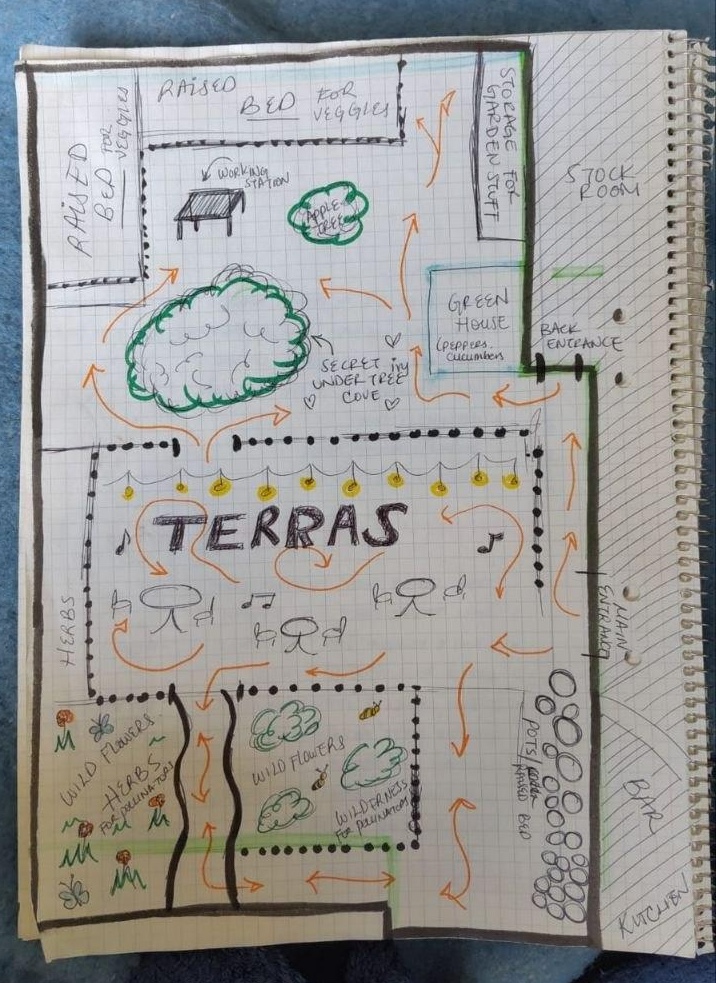
    The plan I shared with the crew in early February.

    I knew it was a huge project. Having just finished the insane rollercoaster of writing a PhD dissertation, and still having to defend it in the next few weeks was probably not the best timing for becoming a community garden coordinator. But there was not a hint of hesitation once I heard the offer. Of course I would carry out the mission of waking up those garden ghosts from their winter sleep and ensure the collective work would be carried out to experience a magical spring in our new community garden.

    The work began slowly, with my winter jacket and boots always on. At times, I sensed skepticism and even cynicism from other crew members. I was questioned due to my lack of experience in community gardening. ‘Fair enough,’ I thought to myself. Not even I was convinced that I deserved to be called a ‘garden coordinator’ just for constantly showing up and falling in love with the garden. But in those early days, whenever I lacked the confidence to make a decision, whenever I got full of self-doubt, I put my trust in where I knew collective work could take us.

    Slowly but steadily, the help I so longed for arrived. We reached out to the community and asked for more gardening hands. Many new faces began showing up and, like me, fell in love with the garden. By mid-March, we had a strong team of committed, hardworking volunteers who showed up to do gardening work, week after week. Each team member is creative and talented in their own ways. They’ve brought with them brilliant ideas, knowledge, friends, projects. Collectively, we cleared the ground from stones and built raised beds for vegetables and a herb spiral. We organized a myriad of hoses, pots, buckets, branches, bags of soil, mulch, additives, fertilizers. We pruned the trees and bushes. We laid out paths made of stone tiles and broken clay. We planted, and planted, and planted more! We cleaned and sanded those mouldy chairs and painted them in bright pink, yellow, and turquoise. We made colorful signs…

    Throughout these busy weeks, the coordinating work has been challenging and insightful. There is an art in understanding each individual’s strengths and passions. People work their best when they’re having fun and feeling purposeful. But everyone has a different way of getting into their zone. Some people are independent, they will jump straight into action. Some people want to have reassurance on their ideas before they act. Some just want to show up, be told what to do, and how to do it. There was a space for everyone, and it was a pleasure to witness how in all our differences, our ideas and efforts came together and materialized into a dreamlike garden.
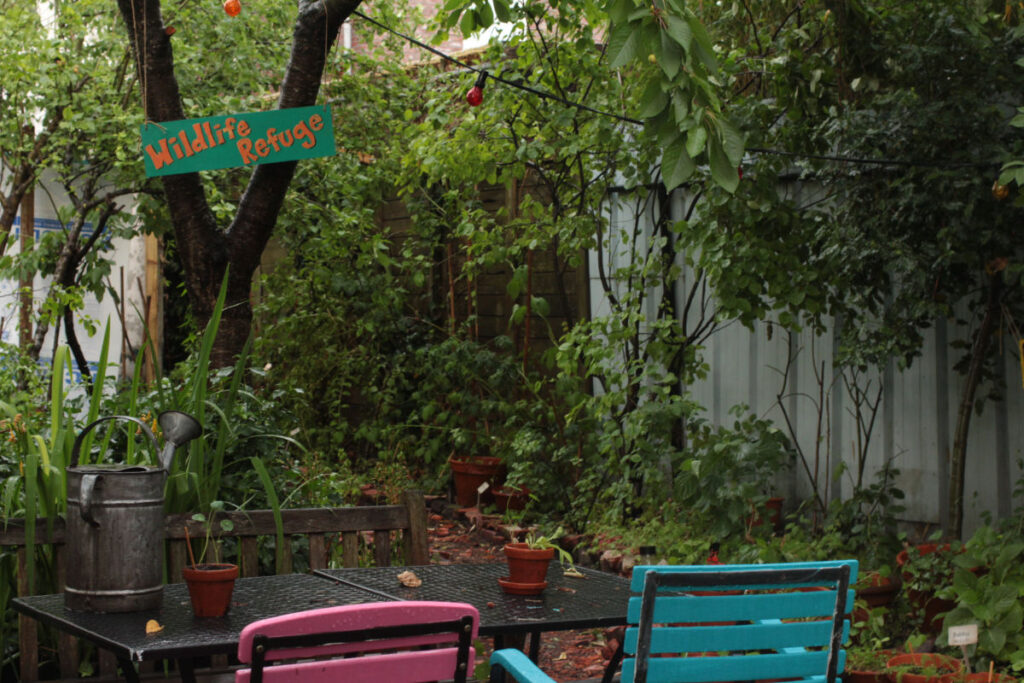
    Looking to the Wildlife Refuge from the terrace.

    At the end of May, Tankstation reopened the doors of its new location to the public. By this time, the ghosts had long come out from within the bushes. They had danced, laughed, and toiled with us. It is now mid-August, and our garden has been a delight all summer. It’s been sunny, rainy, wild, artistic, and bright. Our garden team has bonded along with our garden’s transformation and the changing of the seasons.

    Months after my first impression of a dark, haunted garden, the fruit trees are brimming with soon to be ripened cherries, plums, figs, berries and apples. Our seeds are sprouting, our young plants are becoming adults. Everything is an explosion of green, of colorful flowers, and pollinators. Yet, in the warmth of late summer, there is still much work to do. Seedlings and young plants need protection from the harsh weather, slugs and snails, or clueless guests. We are learning when is the right moment to harvest each plant. We are finding out which of our experiments are working out and which aren’t. Our collective work continues, as does our learning on how to run a community garden. 
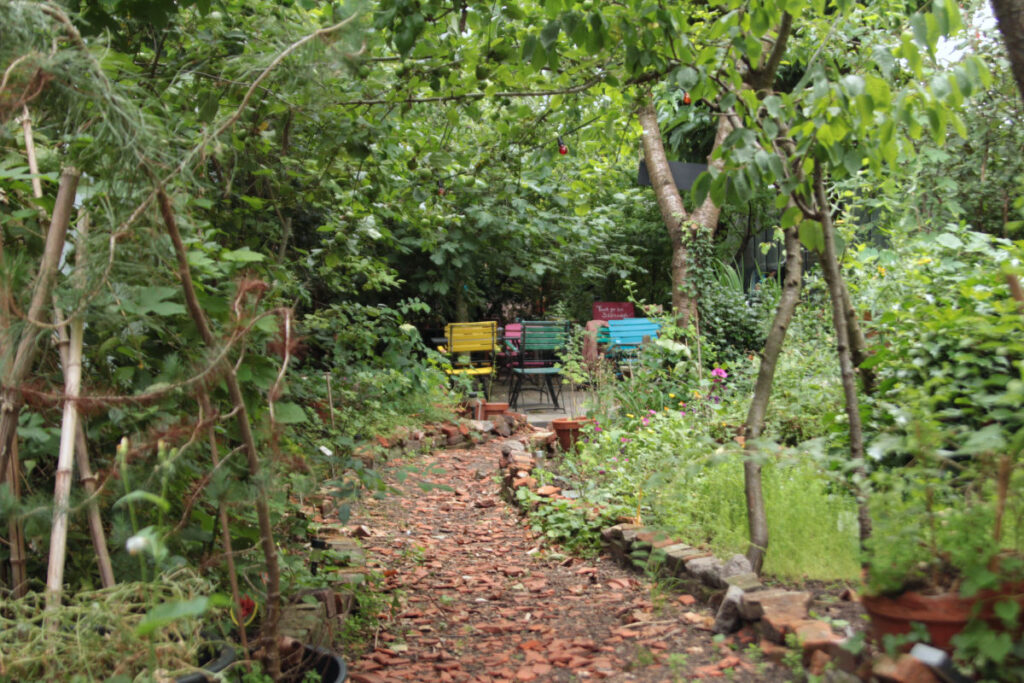
    Looking to the terrace from the end of our pollinator’s path.

    And as far as my heart goes, it is infinitely happy. I have been thinking that loving nature in the 21st century means being in a constant state of grief. On a planetary scale, and in many regions, innumerable species and ecosystems are being recklessly destroyed by the greed of the powerful. There is an abysm between the routine of an average person and the care work and experience needed to fiercely protect and defend life on Earth. But every time I step onto our garden, I am refueled with relentless hope. On our little garden, we are in close contact with life on Earth, and she speaks back to us. She shows us the way of change and regeneration, of patience and collaboration.

    If you’re around Enschede, visit Tankstation’s community garden in Emmastraat 189. You can also see the amazing work my fellow crew members have done within the greenhouse, taste the delicious food from our kitchen, and ‘shop’ in our free Give & Take shop. We’re open to the public on Thursdays and Sundays from 16:00 to 22:00. 
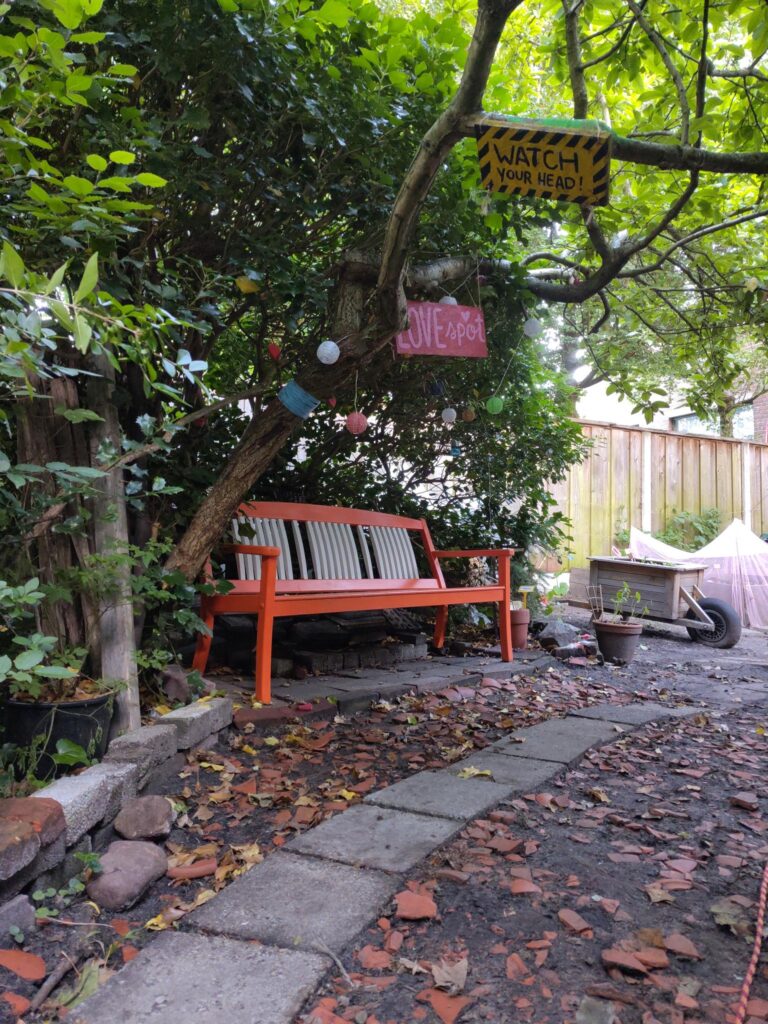
    Our love spot.
    A little before and after of our vegetable area.
  • Dr. Patyt

    Dr. Patyt

    So, I just obtained my PhD degree, which is wild. It was around six years of hard work and overcoming endless moments of self-doubt. My sister and I were laughing because the chair of the PhD Defence ceremony, when granting me the degree, said that the title of doctor meant society could now trust my judgement. We joked that I could use that line whenever people undermine my views: “I am a doctor so that means you have to trust my judgement.” I don’t suppose that’s really true. I’m now an expert on some things, and very ignorant on others. Plus, I would never use my scholarly credentials to demand trust. I would use my experience perhaps, but not a diploma.

    A friend recently asked me how it feels to be a doctor. I said, quite frankly, it doesn’t feel any different that not being one. However, I am relieved that the monumental project I started in 2020 came to a conclusion. It does feel like a weight has been lifted, and now I feel like I can look unreservedly into the future (or lack thereof), try new things and start new projects with a new degree on my CV. I’m curious, excited, and anxious to see how that’s going to pan out.

    Mine’s a bit of a bittersweet existence. I am lucky and privileged in many ways; being able to complete all these projects and adventures, while being hyperaware of how many humans and non-humans are being robbed of their own future, their own projects, their own adventures. I have aimed to apply the PhD journey to amplify different struggles for collective liberation. I cannot be sure yet whether I’ve succeeded in my efforts. What I do know is that one’s work for collective liberation is never really finished. It goes through different stages and forms, it has taken me to different parts of the world, it has evolved, it’s been reinvented, and it may take expected or unexpected forms now. In any case, I vow to continue doing the work, now with a PhD degree, and continue to feel all the rage and the joy that comes with resisting systems of oppression.

    Siempre desde abajo y a la izquierda 😉

  • My PhD defence is coming up!

    My PhD defence is coming up!

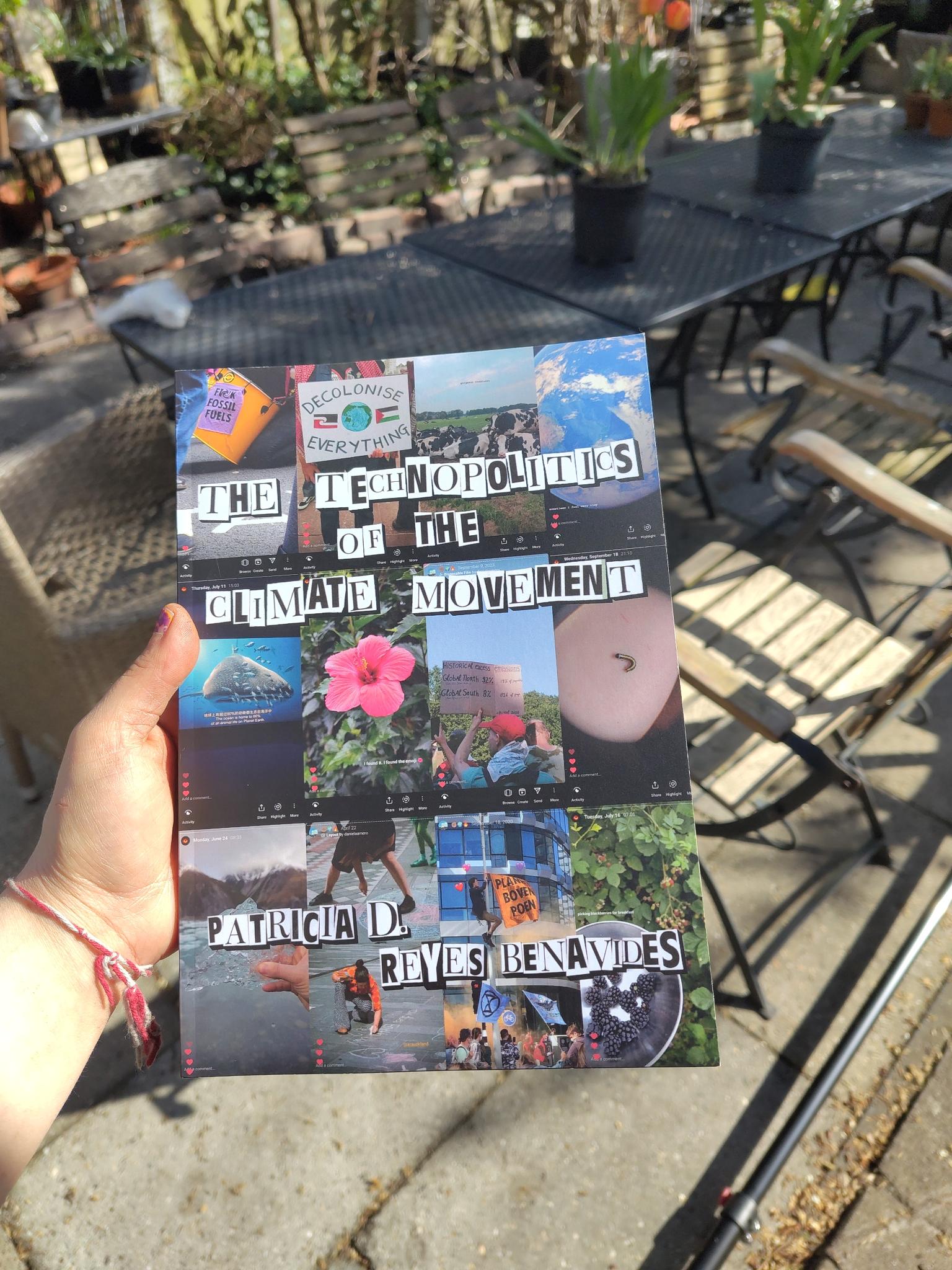
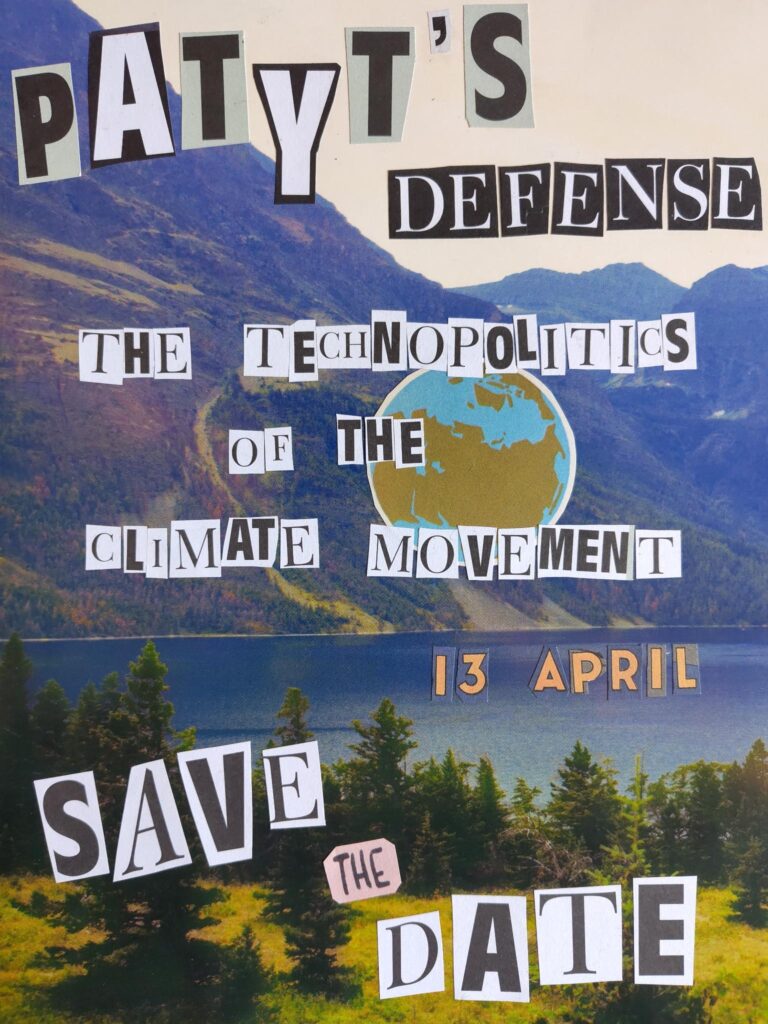
    This April 13 (at 14:30 CET), I will be defending my PhD dissertation on The Technopolitics of the Climate Movement. The ceremony will happen physically at the University of Twente, but I’m trying to arrange an online option for those outside the Netherlands 🙂 If the title piques your interest, you can also read the Summary of my dissertation:

    Summary

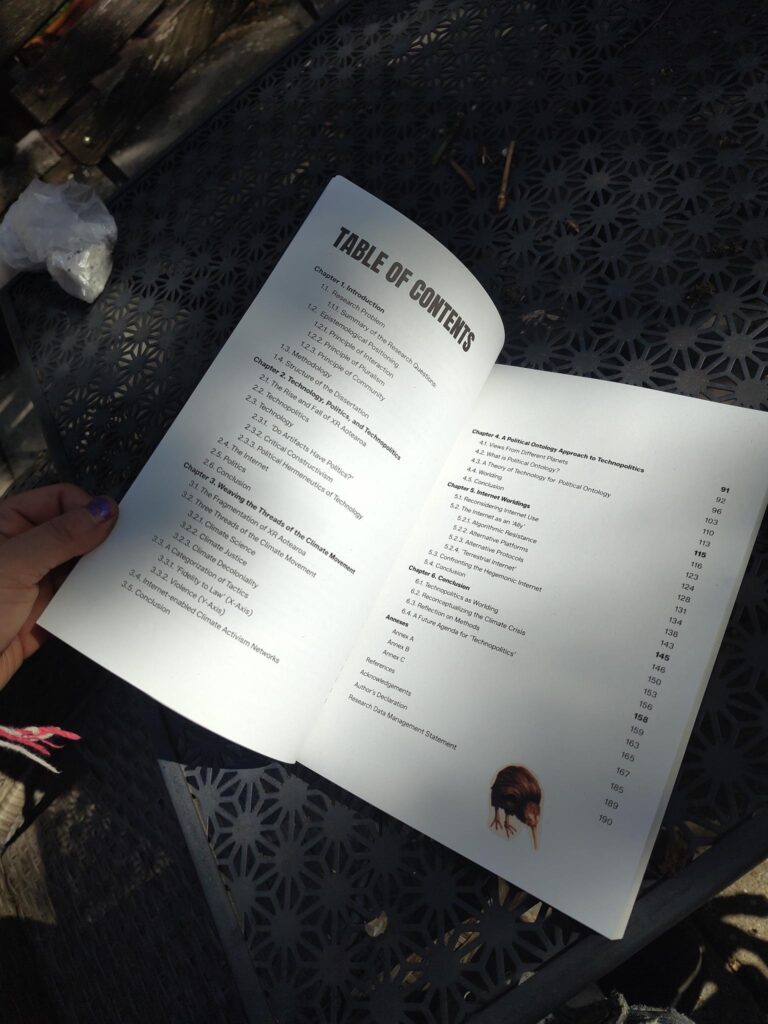
    This dissertation examines the relationship between the Internet and the climate movement through a reconceptualization of ‘technopolitics.’ The examination is conducted by using autoethnographic methods, reviewing empirical research on the climate movement, engaging with historical and philosophical analyses on the relation between technology and politics, and by adopting a Political Ontology approach. The main findings of this dissertation are, first, that the climate movement’s politics should be understood as radically plural. The encounter of different experiences, worldviews, and practices within the climate movement can lead to ontological conflicts. Second, that the Internet plays a constitutive role in facilitating the exchange of different positions and approaches among climate activists, weaving what can be conceptualized as different ‘threads’ in the fabric of a global climate movement. Based on these findings, the dissertation proposes to conceptualize the technopolitics of climate activists engaging with the Internet as a way of worlding, a way of enacting non-hegemonic worlds. Such a proposal is presented with some caveats. To engage with the Internet in non-hegemonic worlding practices, climate activists must address significant challenges, including Big Tech’s increasing centralization of control over the Internet’s multiple layers of functionality, and confronting the intricate interdependencies of territory, material resources, and connectivity.

  • ‘Technologically Mediated Encounters with Nature’

    ‘Technologically Mediated Encounters with Nature’

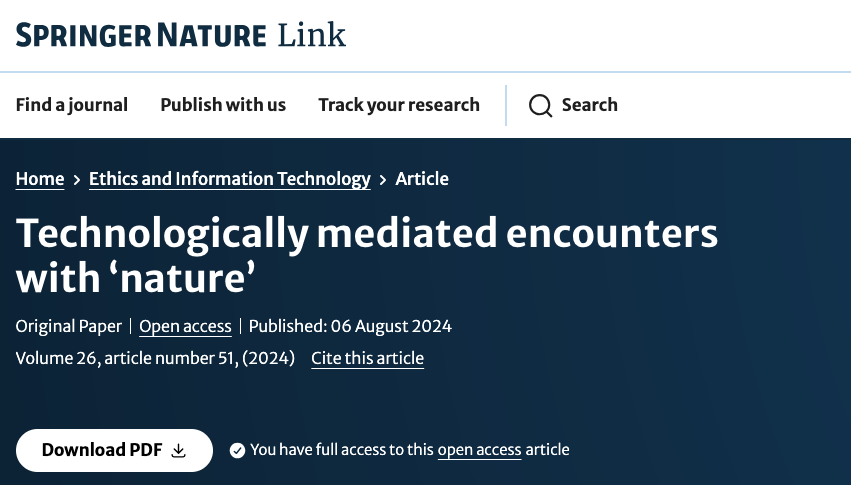
    I’m finally getting around sharing all the stuff that has happened in the last two years. A big milestone was publishing my work in a scientific journal [link to the article].

    The journal I chose was ‘Ethics and Information Technology‘ since they were running a special issue on conceptual engineering, which is basically the idea that the meaning of concepts can be modified according to the role we want such concepts to perform.

    Perhaps a good example of conceptual engineering in practice would be the concept ‘gender‘. A part of society feels like ‘gender‘ should mean the same as sex, and another part feels like ‘gender should include all of the complexities and nuances of identity. Conceptual engineering doesn’t necessarily tell us which way we should go, it just explains how the process of engineering a concept happens.

    Screenshot of my publication

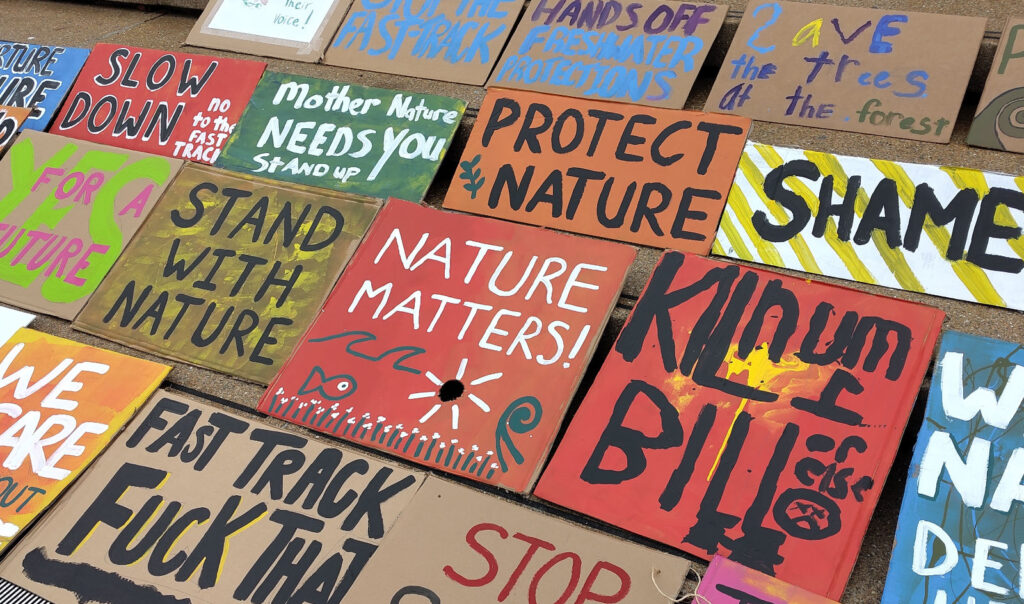
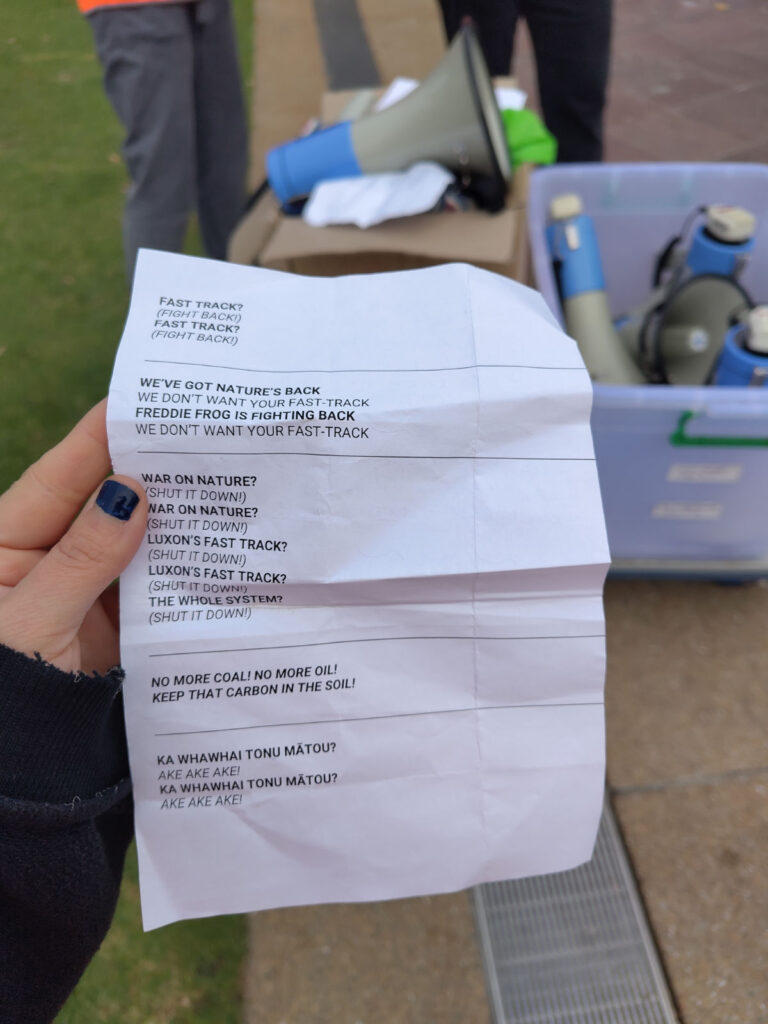
    The article I published makes a case for engineering the concept of ‘nature’ depending on the context in which we’re using it. I was particularly interested in exploring the ways that ‘nature’ helps mobilize people into political action. Some philosophers feel like the concept of ‘nature’ is totally outdated, but I’ve seen first-hand how it continues to inspire people into resistance. The clearest example I can think of is a demonstration that Greenpeace Aotearoa organized in Auckland last year. They called it the ‘March for Nature‘ and it was a reaction to the government targeting protected natural areas for mining. I had the privilege of helping with the march by leading chants with a megaphone. The march had huuuge turnout. The idea of protecting ‘nature‘ had mobilized people that were also working on the racial justice, Te Tiriti justice, animal liberation, and feminist movements.

    Some of the signs the team did for the March For Nature, Auckland 2024

    Chant sheet during the March For Nature, Auckland 2024

    Because ‘nature’ can be an important concept that motivates people to protect the planet, my article also reflects on the question of how our increasing use of digital technologies is changing the ways in which we make sense of the meaning of ‘nature.’ We spend lots of time behind screens, and we get to see all kinds of ecosystems, landscapes, or species on them. We also get to see the planet burn, we see extreme weather events, we see wars, and genocide. The arguments of how technologies influence how we think about ‘nature’ are too intricate to explain in this blog entry. You’ll have to give the 8,000-word article a chance.

    But be warned: conceptual engineering is quite an abstract field (and not at all my area of expertise). I’m not sure why I decided to write a piece on it. I think somehow I wanted to challenge myself by writing something so abstract. Like a rite of passage. Can I really be an academic philosopher?… Well, it turns out I probably can; but this article is probably the most philosophically dense and abstract piece of work that I’ll produce in a very long time.

    Luckily, I also found a couple of opportunities to visualize such abstract ideas. Just as I was publishing the paper, I was invited to contribute to two different art exhibitions. (I’m not an artist, and I don’t know how these kind of invitations happen, but they do. I will leave my reflections on participating at art exhibitions as a philosopher for a different blog entry).

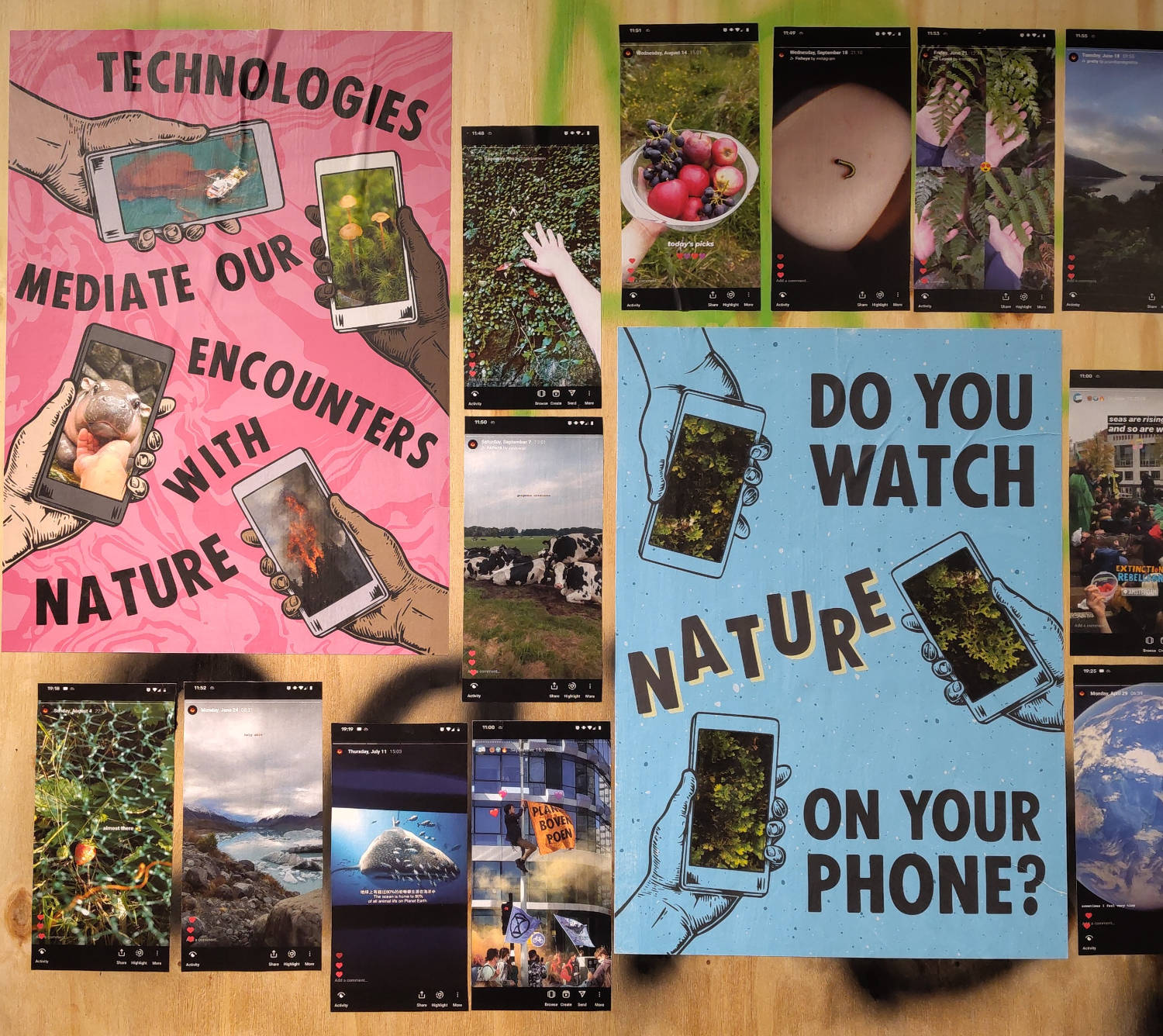
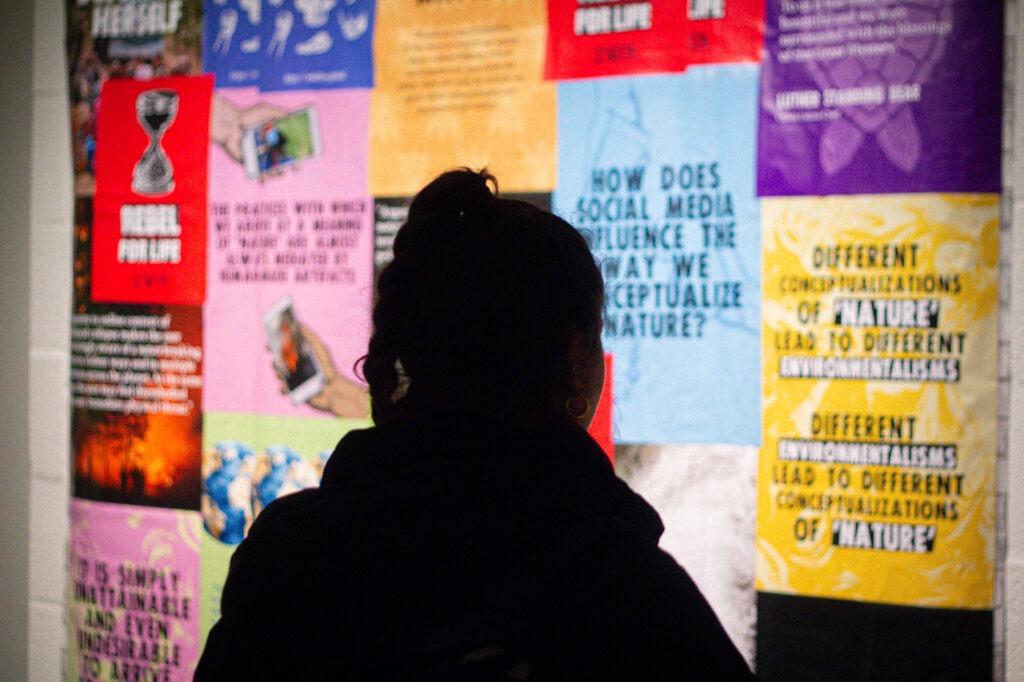
    A picture from my first wheat paste poster wall exhibition

    Here, I will just say that I attempted to turn the ideas of my scientific article into a wheat paste poster wall, which you can see in the first and last images of this post. The process of turning my philosophical ideas into a poster wall was fascinating, and the result was… well… interesting; which is my way of saying I should probably end this blog entry about now.

    I hope you find the ideas in my article compelling. I’ve been thinking about explaining in more detail the arguments of my article in a 10-minute video. If you’d be interested in watching that, do let me know! It’d give me a bit more courage and motivation to record it.

    For now, thank you for reading, kind cybernaut ⋆˙⟡♡

  • Interview for Sickhouse Magazine ♡

    Interview for Sickhouse Magazine ♡

    I was super thrilled to have a featured interview in the second edition of Sickhouse’s magazine. Sickhouse is one of my top favorite projects in Enschede. They self-describe as a “playful art space that explores the transformations of our society through digital culture.” But more than that, they’re also a beautiful community and a home for a lot of us in the city. In conversation with my good friend Niels F. Rodenburg, I was able to reflect on my work, on what makes Sickhouse so especial, and why the theme of their yearly festival “Radical Joy Resistance” is so important today more than ever! (Tip: you can click on the images to enlarge them).

  • GIGGLING IN JAPAN

    GIGGLING IN JAPAN

    Last summer, I had the absolute privilege of traveling to Japan to join a conference from the Society for Philosophy and Technology (SPT). The trip came in the midst of an emotional rollercoaster, the result of a wildly unexpected turn of events that had me feeling like a character from a Jane Austen’s novel adaptation in 21st-century’s Netherlands.

    Because I was busy trying not to lose my sanity, I sort of forgot to prepare for my big trip, which is what I usually do whenever I go somewhere new. You know, learn a few words to say ‘thank you’ or ‘sorry I bumped into you’ to the locals; make sure I won’t unintentionally offend anyone, carefully assess what I must see and how I can get there to see it, etc. This time, I had no plans. Zero. Nul. I had a plane ticket, a few hotel bookings that my colleagues were kind enough to consider me in, and the thrill of my unfolding novel to drag along with me across all corners of Japan.

    My god, that country absolutely blew my mind. I landed in Tokyo and stayed there enough time to feel drunk by the overwhelming citynness of it. The signs! The sea of people’s umbrellas crossing the streets in all directions! Tokyo became a neon-lighted carousel of cocktails, karaoke, and late-night convenience-store onigiris. I then traveled to the countryside and witnessed the magnificence of the archipelago’s mountains and lakes. The way the bright, grey fog would softly meet the green hills! The thickness of the forest! The smell of the moss taking over every single little stone! I went to Kyoto and learned more about ancient Japanese culture. I felt the joy of holding a warm cup of matcha in my two hands; of smelling miso warming up on Ramen broth; of hearing the striking of strings from the koto. I arrived to the last city, Osaka. That city was so incredibly over the top in all the ways that make my heart jump inside of my chest. I don’t know. There were giant octopuses and crabs hanging from the top of the buildings; people queuing up in every corner to buy delicious food. I needed an extra pair of eyes to take it all in.

    After three weeks of adventures, I had learned more Japanese customs and phrases that I could’ve ever dreamed of. I came back to a last night in Tokyo, to a hotel where the reception was managed by robot dinosaurs. I’m not even kidding. A robot T-rex asked me for my passport. I took a walk around the neighbourhood and bought some of my favorite Japanese things to bring back home: A bunch of 7-Eleven Matcha donuts and a bottle of plum wine. I brought instant noodles to the hotel room, made a final mess in Japan, and slept with a smiling heart.

    A little note for the hotel staff.

    What an honor, really, to have witnessed those unbelievable sights and experienced those indescribable adventures, all while wearing my heart on my sleeve. I know now I would not have changed any of it. I wouldn’t have planned it any differently. I wouldn’t have rushed it or made it slower. The way it all happened was absolutely perfect.

    It’s been only a few months, yet it feels like I’ve changed quite a lot since that trip. The emotional rollercoaster ride is now more like a canoe ride on a slow river, and the experiences I once vividly embodied in Japan have turned into beautiful, hazy memories.

    The pictures I took do no justice to the actual beauty of the country, but I’ve still decided to showcase them all in a little corner of the world wide web. So now, if you are curious to see Japan through my cyborg eye, you can check out the gallery by following this link:

    https://giggling-in-japan.tumblr.com/

    p.s. the theme is a bit wobbly, so if you see pictures stacking over each other just refresh the page 😉

  • GOGBOT 2021 OPENING SPEECH

    GOGBOT 2021 OPENING SPEECH

    The following text is a speech I wrote for the opening of the GOGBOT Art & Technology festival in 2021. That year, the theme of the festival was “Infocalypse Now: Time to Recalibrate Reality. Infocalypse was conceptualized as an overwhelming stream of information that blurs the boundaries between reality and fiction. I delivered the speech after weeks of building an interactive installation with Extinction Rebellion Twente, the design collective ‘This Ain’t Rock N Roll,’ and Clare Farrell, co-founder of Extinction Rebellion UK. You can see pictures of our installation throughout the blogpost.


    This is how the audience looked that day.

    The mass confusion created by the overwhelming amount of information that we’re subjected to every day is only possible because of how advanced and pervasive digital technologies are. While lies and propaganda have always been used for controlling societies, never in the history of human civilization have we been as suffocated with opinions, memes, videos, and all kinds of unending streams of data as we are today.

    Digital technologies and the information they feed us infiltrates every bit of our lives, sneaking into our political debates, shaping our closest relationships, and eliciting reactions to the multiple catastrophes and crises happening simultaneously around the world.

    And it seems like some of us can’t get enough of it. We keep unlocking our phones, coming back for more. We unlock it from our beds the moment we wake up; while we’re on the toilet; during our coffee break; before falling asleep, every single day.

    Yet it would be lazy to simply blame these ‘technologies’ as the root of all our problems, as these indestructible, out-of-control forces under which us, mortal humans, are doomed to be enslaved.

    We sometimes forget that even the most sophisticated algorithms and powerful AI systems depend on design decisions made on the basis of political and ideological goals. And we forget that, as users, we can turn technologies off, or around, or upside down.

    We shape the future of technologies just as much as technologies shape our future. And I think that it is under this understanding we could begin to ‘recalibrate reality.’

    In my branch of philosophy, some people argue that reality is actually performed. What that means is that reality is not something that exists apart from ourselves, that we then analyze from a distance, as if it is happening beyond our control. No, reality is being constructed by us, with what we say and what we do.

    Like David Graeber once wrote, “the ultimate, hidden Truth of the world, is that it is something that we make, and could just as easily make differently.”

    Extinction Rebellion’s + This Ain’t Rock N Roll installation

    And this is an incredibly powerful idea for activism because it reassures us that when we speak up for what we believe in, when we act as if we were in the society we want to live in, we are effectively changing the world. We are effectively recalibrating reality. And just like that, your words and actions have the power to recalibrate reality.

    Except there’s one problem. We all don’t just inhabit our own individual realities. We are sharing a collective one. We share it with our friends, who’ve got our backs and the best intentions; but we also share it with some very powerful, self-interested folks who wouldn’t think twice in harming the rest of us to get what they want.

    So, reality becomes this field of struggle with everyone shaping it, whether consciously or not. Take climate change for instance. A hotter planet is our current reality. Why? For starters, because some really influential and powerful people are making an economy based on fossil fuels the only possible reality. Climate reporter Emily Atkin said in an interview, “climate change is not something that is happening to us, it is something that is being done to us.”

    Likewise, the Infocalypse is not something that is just happening to us, it is something that is being done to us. There’s a fortune being made out of YouTube’s recommendations algorithms, which infamously push conspiracy theories. There’s a fortune being made through the economy of keeping your attention, scrolling, liking, and sharing. Someone is profiting immensely from it.

    So, the way I see it, we either consume and consume information uncritically, feeding into the mass confusion and the Infocalypse, or we take some control back and become accountable for the things we create, the things we put out there, and how those things shape reality.

    That’s my message for you today: turn digital technologies around, and focus on what you put out there. This is what Extinction Rebellion Twente and my dear friends, Clare Farrell, co-founder of the movement, and This Ain’t Rock n Roll tried to do with our installation at the Oude Market: a confrontation with our horrifying reality of mass extinction, but offering each one of us the possibility of creating a different reality.

    Workshops at Extinction Rebellion’s + This Aint Rock N Roll installation

  • IN THE FACE OF TOTAL COLLAPSE, LET’S TALK ABOUT MATERIALIZING A NEW WORLD

    IN THE FACE OF TOTAL COLLAPSE, LET’S TALK ABOUT MATERIALIZING A NEW WORLD

    NEXT UP! Wednesday DECEMBER 2nd, I will co-moderate, with the amazing Marie Janin, the symposium of THE OVERKILL FESTIVAL online edition 2020.

    During this symposium, we will host 4 speakers from all over the world: artists, designers, developers, and activists who are reinventing the ways in which we understand ecosystems and reorganize society through digital technologies.

    As a response to this year’s Festival’s theme “The End of the World as You Know It”, I consider this symposium a great opportunity to envision, along with our speakers, new worlds that materialize from human’s expanding ecoconcience in the digital age. Could it be possible that in these new worlds, humans are re-learning their position in the planet, connecting with digital technologies and other organic beings?

    Link to the Facebook Event
    Link to the Symposium WebPage

    ABOUT THE SPEAKERS

    Natasha Tontey is an artist and graphic designer based in Yogyakarta, Indonesia. Natasha’s work explores the influence of fiction in our thinking of the future. She is interested in the notion of “manufactured fear” and horror as a method for public control. Her videos and performances often use macabre tones and challenge social tendencies of anthropocentrism and conformity with binaries.

    Her recent project “Pest to Power”, shown at The Overkill online exhibition, explores the future of the Earth through the agency of cockroaches. She invites the viewer to consider these little fellas’ existence: thousands of years of being denigrated by humans, relegated to the role of an unwanted pest, carriers of filth and disease. Could we learn something about our own humanity by adopting the perspective of cockroaches? How could we revise our relation to all species in a way that is constructive and sustainable?

    A still of Pest to Power (check the video at the The Overkill Online Exhibition)

    Maize Longboat is a digital media educator, videogame developer and producer based in Tiohtià:ke (also known as Montréal). He is the creator of Terra Nova, a two-player cooperative game that narrates the first contact between an indigenous person and a settler. However, this first contact happens years into the future, after a massive climate event has forced most humans to leave the planet.

    As a Kanien’kehá:ka (Mohawk) from the Six Nations of the Grand River, Maize’s current collaboration within Aboriginal Territories in Cyberspace and the Initiative for Indigenous Futures, is a testament to the thriving presence of Indigenous people in digital space. His work helps shatter misconceptions of Indigenous peoples’ relation to digital technologies, and contributes to their self-determined future.

    Terra Nova – click here to play!

    Barnaby C. Steel is the co-founder of Marshmallow Laser Feast, a London-based experiental art collective that uses Virtual and Augmented Reality to expand humans’ perception and experiences of the natural world. The collectives’ creations allow people to embody, for example, the senses of mosquitoes or trees.

    Barnaby believes that VR can tap into the emotions and imagination of a human population that is increasingly concentrated in cities, spending most of its time indoors. His vision is that these techno-artistic creations will encourage people to protect ecosystems and connect with other species.

    Teaser of Marshamallow Laser Feast’s ‘Treehugger’. A version of this piece can be visited in The Overkill Online Exhibition.

    Iris Zhan (@iris4action) is a 17-year-old climate activist based in Maryland, U.S. Iris is the co-founder of Fridays For Future Digital, an initiative that gives young activists an outlet to protest online when they cannot convene physically for climate strikes.

    Iris is also an active member of the Sunrise Movement, a youth-led grassroots campaign in the United States, that has been lauded for its influence in Joe Biden’s increasing attention to climate mitigation policies. Iris and her colleagues work extremely hard to materialize a sustainable and decarbonized world. I am excited to have her fearlessness and conviction present at our discussion, as well as her experience of the impact of digital technologies in activism.

    JOIN US!

    I’m sure this will be a super inspiring session that will unleash our imagination and give us ideas on how to move forward and leap into new worlds. Join us by watching the live stream on YouTube (17:00 – 20:00 CET / 11:00 – 14:00 EST) so you can ask questions to the speakers through the live chat. See you there! ♡

  • I DON’T KNOW WHY I CARE, BUT I VERY MUCH DO

    I DON’T KNOW WHY I CARE, BUT I VERY MUCH DO

    Reasons for being nice to other lifeforms abound, but around them, there is a ghostly penumbra of feelings of appreciating them for no reason at all. Just loving something never has a great reason attached to it. If you can list all the reasons why you ‘should’ love this particular person, you’re probably not in love. If you have no idea, you might be nearer the mark.

    — Timothy Morton, “Being Ecological

    Bodies of water are usually terrifying to me. I find fish completely alien and disgusting since I’ve had memory, which is why I can hardly enjoy swimming in lakes and seas. But last weekend, I decided to overcome this fear and surprised myself with a plethora of sensations. 

    A group of friends and I spent a day in Füssen, a charming town in the Bavarian region. It was a sunny Saturday and we were picnicking by a lake. With a little bit of encouragement from my friends, I took my slippers off and stepped in the water. It was covering my ankles and I quickly looked down to discover I was surrounded by dozens of fish. They were swimming there, centimeters away from my skin. I was petrified and overfull by a feeling of unease, but I waited and paid attention.  The fish weren’t even curious about my presence. They were just there being fish and doing their own thing. I felt silly. 

    I slowly walked further into the lake, up to the point I couldn’t see them anymore. I knew they were there in big numbers, swimming around my hips, my waist, and my shoulders. I took some air and submerged my head in the water. I came out frantic, gasped, and looked at the hills and mountains surrounding the lake. I was so little in a mesmerizing landscape, sharing the fresh water under the warm sun with these little fellas. A friend pointed out there were a couple of ducks swimming my way. I felt like that meme of Arnold Schwarzenegger being one with Nature.

    After a few minutes of trying really hard not to freak out, I noticed one of the ducks caught a fish in its mouth and I suddenly became super conscious about water creatures. I nervously came out of the lake, feeling victorious, nevertheless. 

    Why does it matter?

    Because after reading hundreds of pages about our “being” ecological, (not in the sense of caring about the environment, but in the sense of becoming deeply aware that we are just a part of this über complex system we call nature), I’ve decided to take these lessons off my books and into my experience of the world I inhabit. This is what made me step in the lake and pay attention to the fish that have so intensely disturbed me in the past.

    It’s almost indescribable, the shift I get to feel in my entire body, like scraping from my skin all my preconceived notions of self-importance in an ecosystem that has a life of its own. It isn’t always pleasurable nor easy. I was born and raised in the city, with concrete below my feet and smog within my lungs. I became most familiar with A/C, leather couches, iced coffee and perpetual electrical outlets. Sometimes, experiencing things like fish in lakes feels daunting, awkward, unfamiliar. 

    Come to think of it, everything in my cultural upbringing taught me that us humans are a special kind of species. We can force beings we don’t find pleasing out of their habitats. We can domesticate other beings to meet our most capricious desires. We can transform our environment to simulate our modern dreams of minimalist lofts, carpets, lamps, ceramic, mosaic. 

    It’s starting to dawn on me that perhaps we shouldn’t. Perhaps we should be respectful and pay attention to our surroundings and the other lifeforms that inhabit it, stop making our needs and wants the center of the fucking universe. It doesn’t matter if it’s fish, snails, bees, weeds, flowers. Shifting our perception of other lifeforms and our relation to them is the single most powerful feeling I believe can make us ecological. 

    The greatest tragedy for folks like me who grew up in concrete jungles is that if we don’t make a conscious effort, this mysterious feeling of being ecological will pass us completely by. We might visit forests, oceans, deserts, the Mayan jungle, but we’ll consume them just as we consume iced coffees. We’ll watch the waves until the sun sets, cocktail in hand, from seats where we can’t quite see coral reefs dying. Then we’ll go back to our resort to sleep in a king size bed with fresh linens. 

    It is not our destiny, though. We’re always one decision away to rediscover the world with the eyes and curiosity of a child. We can decide to venture into unknown sensations, looking closely and attentively at other lifeforms as if nothing was given, as if things weren’t there for our pleasure or consumption. All we need is to be respectful and take a minute to pay attention. I’d say otherwise, all we’re left with is petty pleasures. We’ll be missing out on something truly magical, destroying irreplaceable things and ourselves in the process. 

    Picture of the lake taken by Diana