This essay recounts my experience as a community garden coordinator during the last 6 months. I’d like to thank the Tankstation crew for trusting me with this role and showing me how far teamwork can go: Creating things together with you always warms my heart!
[~2k words : 10-minutes read time]
Last winter, I came back from a two-year hiatus from volunteering at ‘Tankstation,’ a cultural meeting space with the warmest community in Enschede. When Tankstation started, back in 2013, our community had secured an old, abandoned gas station (hence the project’s name) near the city center. As a crew of volunteers, we cared for and loved that space for over 12 years. We’d offer weekly concerts, workshops, art exhibitions, and vegetarian meals. However, by the end of last year, the municipality and a housing corporation started acting on their plans of demolishing that old gas station and erecting a new building that would fit the modern world. ‘Tankstation’ had to move.
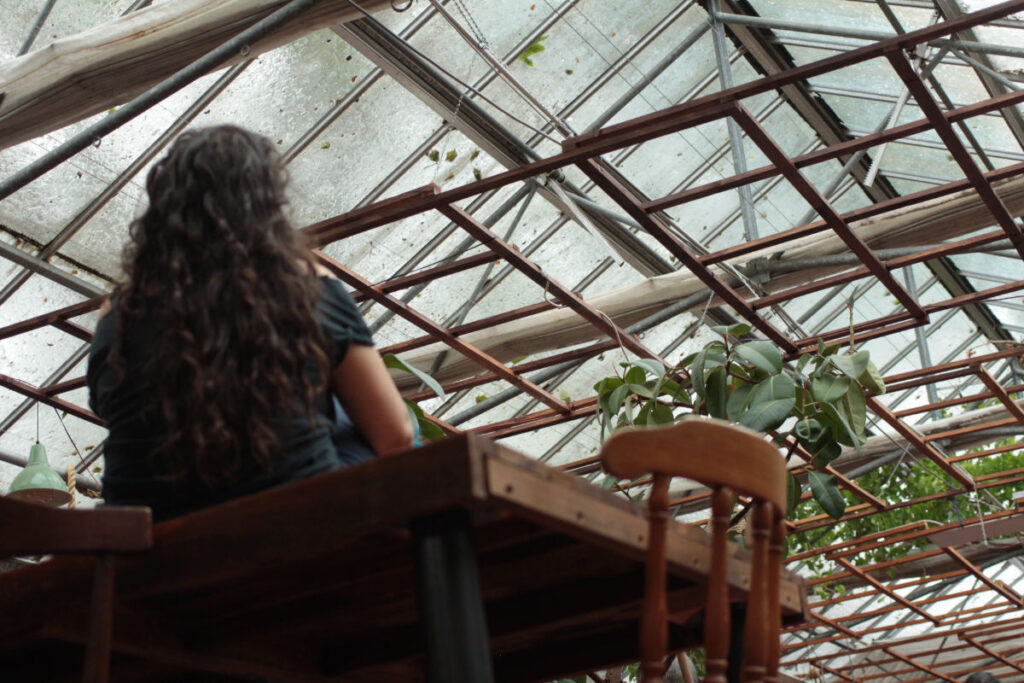
While the news of having to vacate our old building felt as a shock, the then Tankstation’s board members quickly found us a new place to call home. Having a new location was a relief and an answer to the question of where we would continue to host our community events. But as much as it was a relief, the new location was a big challenge. It is mostly a huge glass house — a greenhouse — vulnerably exposed to the whims of the Dutch weather, and in a residential neighbourhood that’s still not sure how it feels about having a bunch of weirdos doing who knows what inside such an unusual space.
In the previous months, I had watched from afar the massive amount of work that the crew put into moving Tankstation’s equipment and furniture from the old place to the new one. Thus, once I had submitted the final draft of my PhD dissertation, I put and end to my Tankstation hiatus and decided to check-in with the crew. I was ready to volunteer again and decided to visit the new location right after all the stuff had been moved.
It was an afternoon in early January when I walked with curiosity into the massive greenhouse. The air was freezing cold and damp. Even indoors, I could still see my breath. The place was packed with stacked chairs, tables and couches, toolboxes, half-dead plants, amplifiers, stage equipment, and the odd thing here and there. You had to watch your step and make your way through the clutter. I got the sense that I was walking through no man’s land. Crew members cautiously informed me that the whole organization was going through major changes. The move had been exhausting, the build up was a daunting prospect. Here was this huge new location and a massive amount of work ahead of us. No one and everyone was calling the shots.
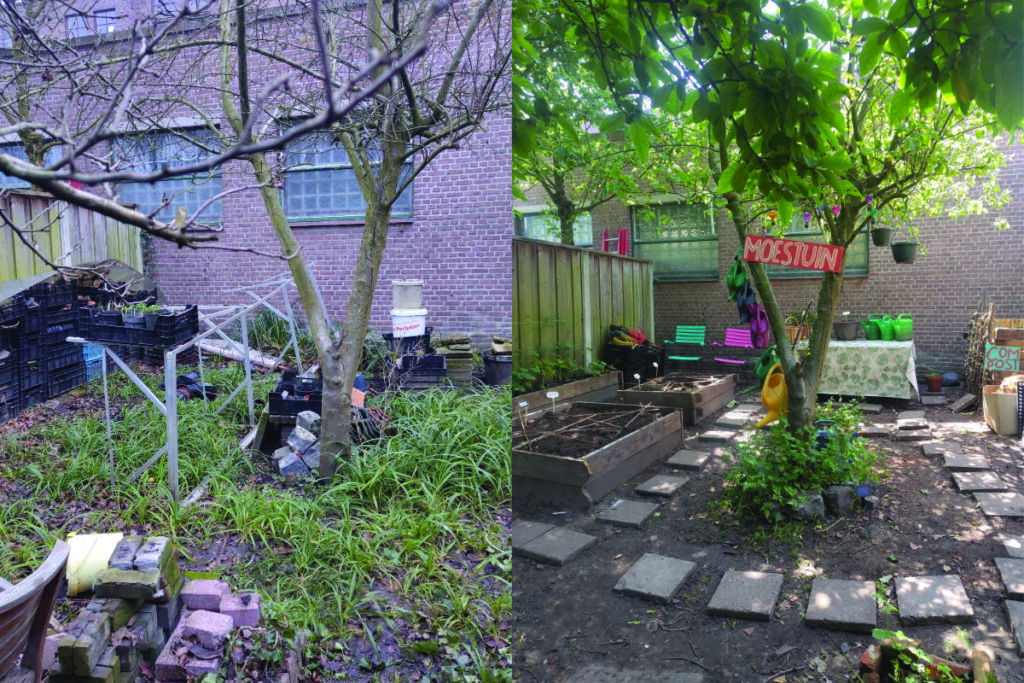
I noticed a big sliding door to the left of the greenhouse. I pulled hard with both arms to open it and stepped out onto a huge, dormant garden. I remember gasping at the sight and bringing a hand to my mouth. I stood there for a few seconds, taking it all in under the gray, dark sky: dozens of bare trees standing around a paved square covered in old wood planks, bricks, and other building materials. Huge tree branches laying all over the ground, which must have been cut from the trees not too long ago. I saw a myriad of pots placed on unexpected corners, some with leafless young trees, some full of dark soil to the brim with nothing growing in them. There were dozens of worn-out, mouldy wooden chairs at the sides, in no purposeful location, rotting vestiges of what were once wooden-top tables, piles of stone tiles, buckets full of stagnant rainwater, and hundreds of clay and plastic pots stacked all over the garden.
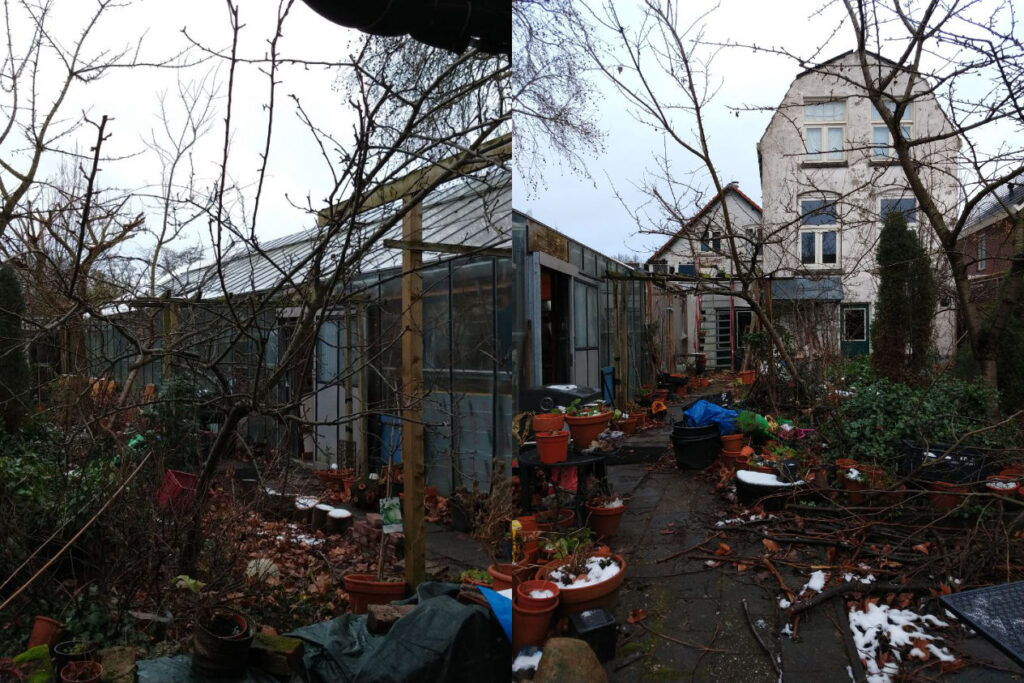
I went past the paved square and walked through the trees and bushes, noticing where tree trunks and stems came from, feeling the sheer size and complexity of the space. I went around its corners, inquiring with my hand what was covered underneath the overgrown ivy.
There was certainly a wilderness to it all. The plants must have had the freedom to take over the place for a few years. But there were also the vestiges of years of human work. In the depth and darkness of winter, it felt like garden ghosts were hiding among the decidious trees and bushes; observing, waiting for action.
I felt my heart expanding within my chest, trying to acommodate this huge gift in it. The space, the trees, the mountains of disorganized materials, the seasons stretching in front of us, the opportunity of dusting off those ghosts and bringing a little paradise back to life.
Over the next few days, I started showing up consistently at ‘the greenhouse.’ I would walk out of the sliding door and study the garden. I looked at each plant more carefully. I began moving things from one place to another, putting branches on a single pile, stacking tiles, making space, doing a mental inventory of the different materials. I started sketching out a vision.
Soon thereafter I met Susanne, a retired ecologist who lived right next door to the greenhouse and who had run an organic plant shop in that same building for many years. I learned that she had been the human hand behind that enchanted garden. Her botanical knowledge of it was astounding. We walked through the space while she identified the trees and bushes, explained the soil composition, and revealed what flowers were sleeping on those pots full of soil.
Susanne had to close her plant shop a while ago and hadn’t been able to keep up with the garden during the last years. Now here we were, an inexperienced yet committed crew of volunteers bursting with new ideas. I began asking her opinion on different projects, like raising vegetable beds and herb spirals; pruning trees, or using different materials. She encouraged us to be brave and try things out, to not be afraid of failing. She was also protective of certain species and explained why they needed maintenance and protection. Susanne was the key to uncovering the garden’s hidden treasures and gave us invaluable advice on how to keep it healthy and thriving.
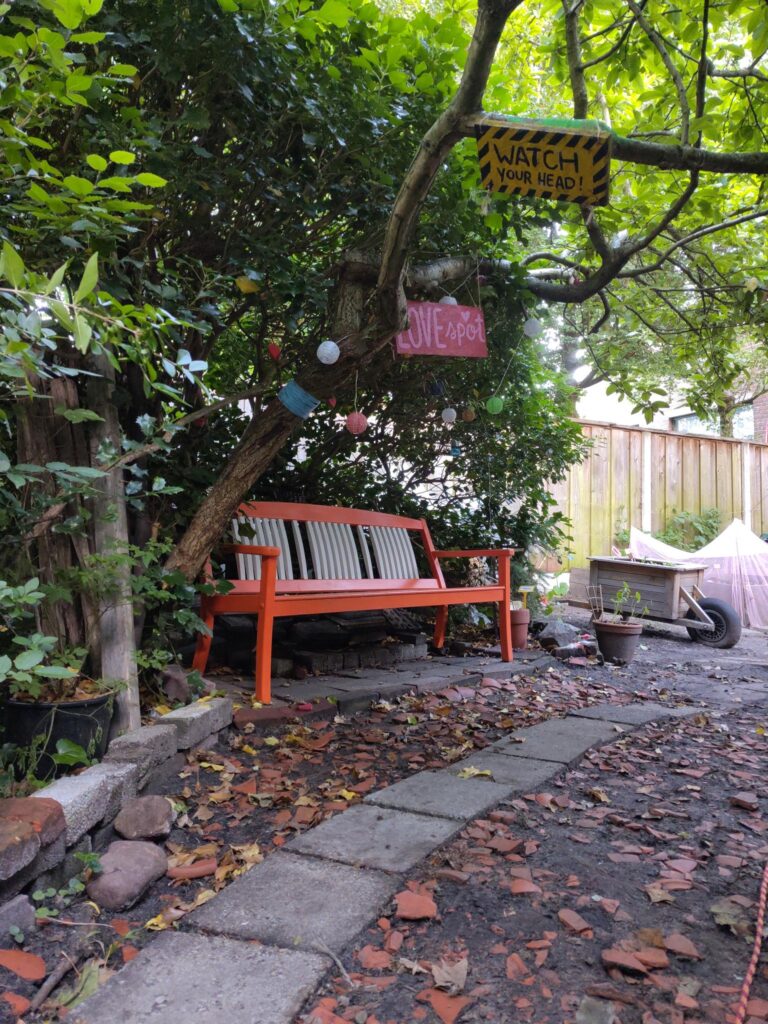
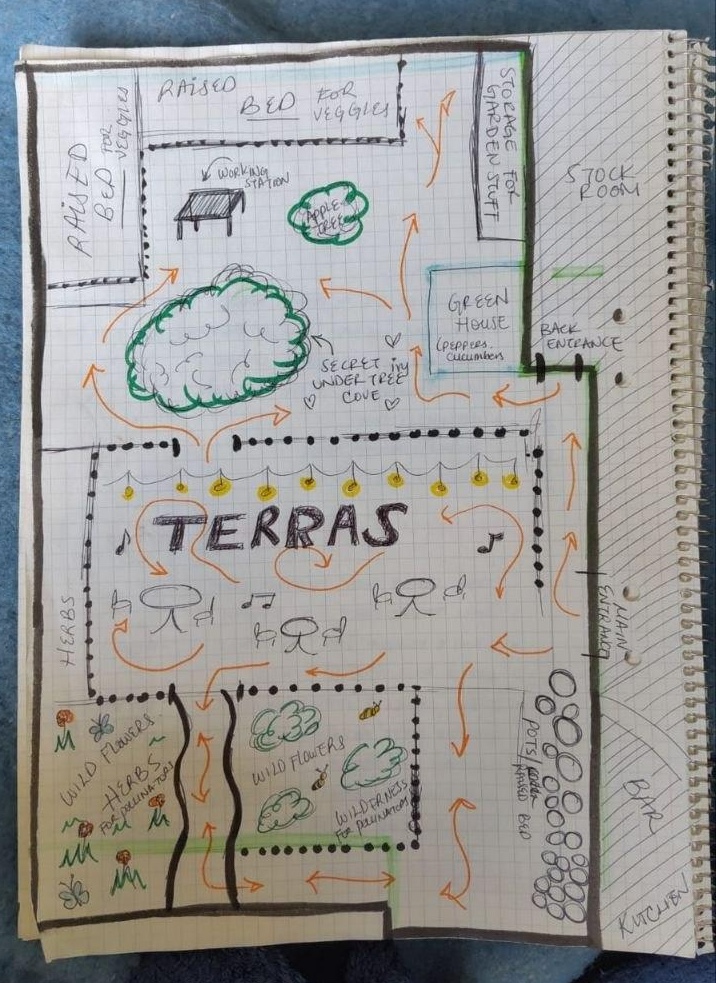
After a couple of weeks of studying the space, I came back to the Tankstation crew with a proposal — a drawing on my notebook with a layout for a community garden. The layout included sections for vegetables, herbs, pollinators and wildlife, a romantic hiding spot, and a terrace. The response from the team was so enthusiastic, that I was offered to take on a new position as a ‘garden coordinator.’
I knew it was a huge project. Having just finished the insane rollercoaster of writing a PhD dissertation, and still having to defend it in the next few weeks was probably not the best timing for becoming a community garden coordinator. But there was not a hint of hesitation once I heard the offer. Of course I would carry out the mission of waking up those garden ghosts from their winter sleep and ensure the collective work would be carried out to experience a magical spring in our new community garden.
The work began slowly, with my winter jacket and boots always on. At times, I sensed skepticism and even cynicism from other crew members. I was questioned due to my lack of experience in community gardening. ‘Fair enough,’ I thought to myself. Not even I was convinced that I deserved to be called a ‘garden coordinator’ just for constantly showing up and falling in love with the garden. But in those early days, whenever I lacked the confidence to make a decision, whenever I got full of self-doubt, I put my trust in where I knew collective work could take us.
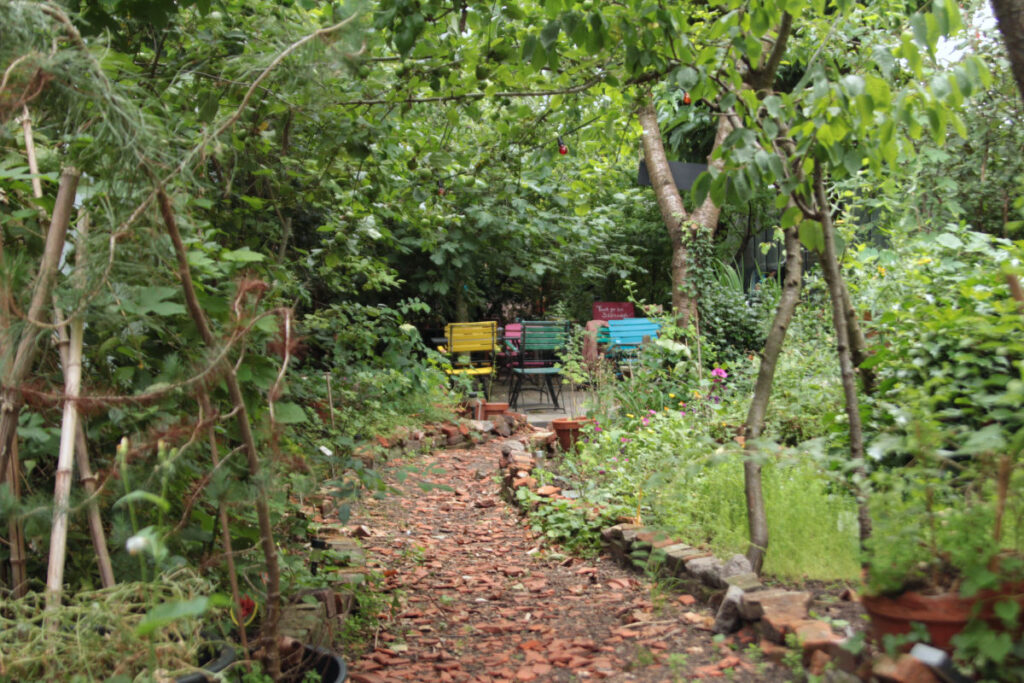
Slowly but steadily, the help I so longed for arrived. We reached out to the community and asked for more gardening hands. Many new faces began showing up and, like me, fell in love with the garden. By mid-March, we had a strong team of committed, hardworking volunteers who showed up to do gardening work, week after week. Each team member is creative and talented in their own ways. They’ve brought with them brilliant ideas, knowledge, friends, projects. Collectively, we cleared the ground from stones and built raised beds for vegetables and a herb spiral. We organized a myriad of hoses, pots, buckets, branches, bags of soil, mulch, additives, fertilizers. We pruned the trees and bushes. We laid out paths made of stone tiles and broken clay. We planted, and planted, and planted more! We cleaned and sanded those mouldy chairs and painted them in bright pink, yellow, and turquoise. We made colorful signs…
Throughout these busy weeks, the coordinating work has been challenging and insightful. There is an art in understanding each individual’s strengths and passions. People work their best when they’re having fun and feeling purposeful. But everyone has a different way of getting into their zone. Some people are independent, they will jump straight into action. Some people want to have reassurance on their ideas before they act. Some just want to show up, be told what to do, and how to do it. There was a space for everyone, and it was a pleasure to witness how in all our differences, our ideas and efforts came together and materialized into a dreamlike garden.
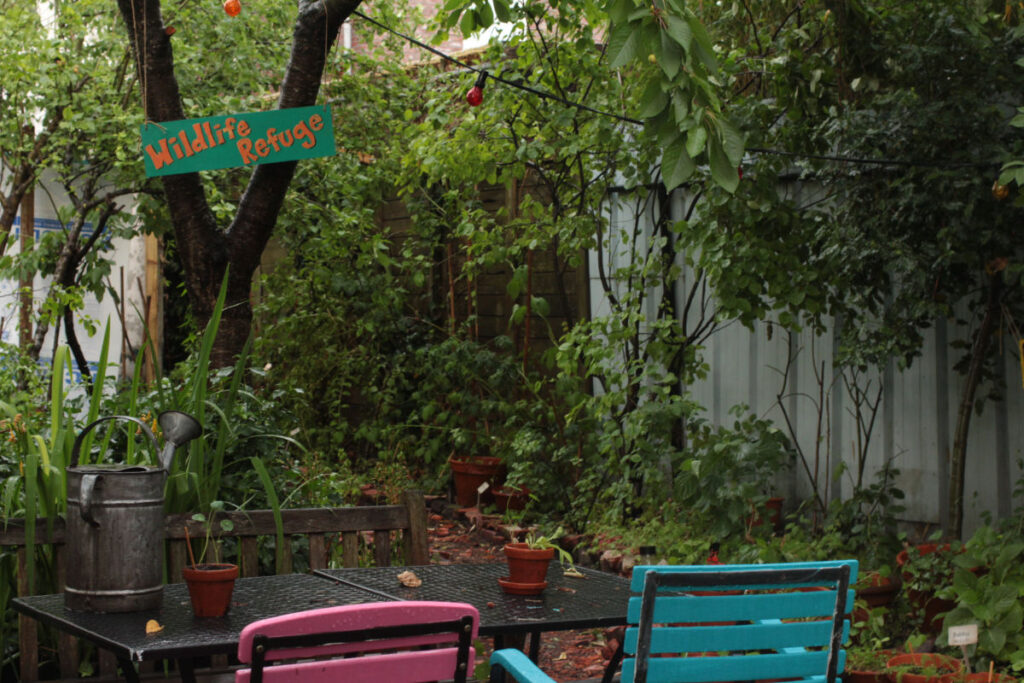
At the end of May, Tankstation reopened the doors of its new location to the public. By this time, the ghosts had long come out from within the bushes. They had danced, laughed, and toiled with us. It is now mid-August, and our garden has been a delight all summer. It’s been sunny, rainy, wild, artistic, and bright. Our garden team has bonded along with our garden’s transformation and the changing of the seasons.
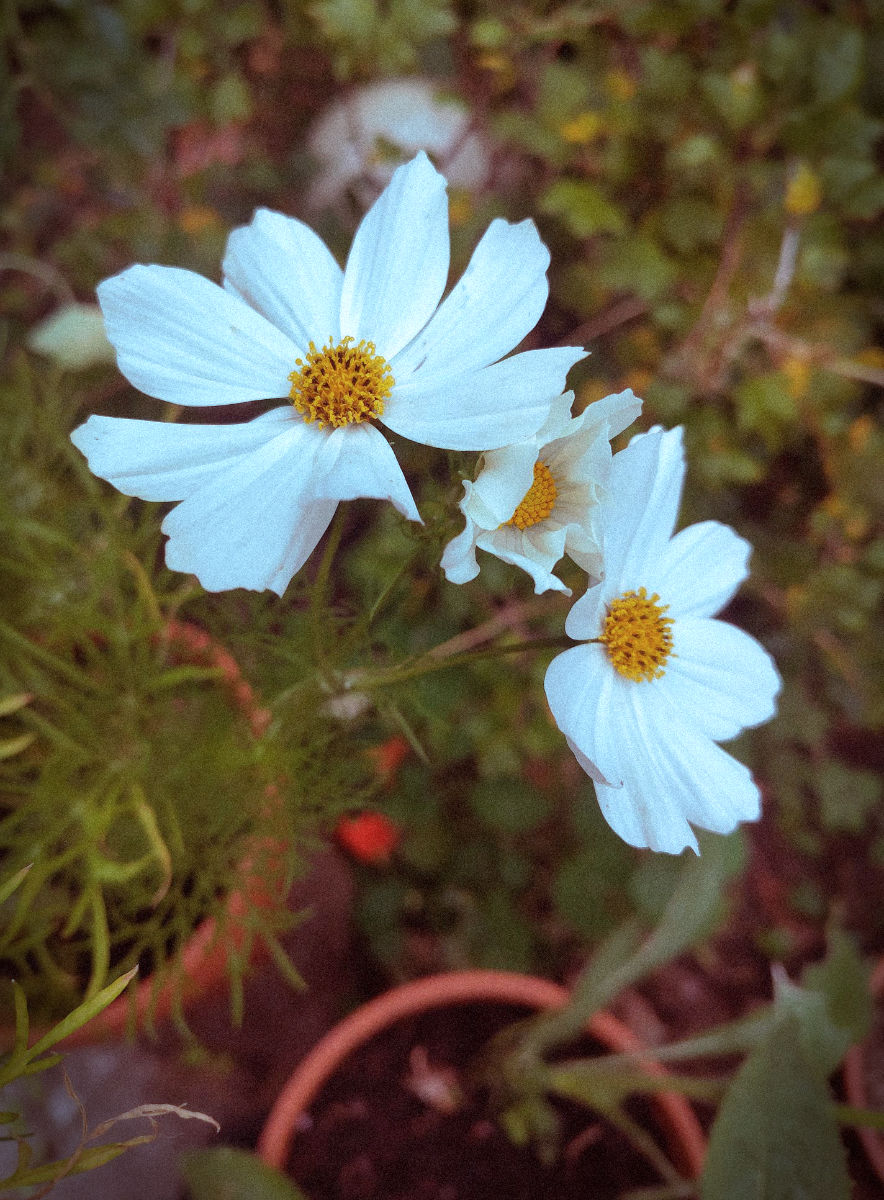
Months after my first impression of a dark, haunted garden, the fruit trees are brimming with soon to be ripened cherries, plums, figs, berries and apples. Our seeds are sprouting, our young plants are becoming adults. Everything is an explosion of green, of colorful flowers, and pollinators. Yet, in the warmth of late summer, there is still much work to do. Seedlings and young plants need protection from the harsh weather, slugs and snails, or clueless guests. We are learning when is the right moment to harvest each plant. We are finding out which of our experiments are working out and which aren’t. Our collective work continues, as does our learning on how to run a community garden.
And as far as my heart goes, it is infinitely happy. I have been thinking that loving nature in the 21st century means being in a constant state of grief. On a planetary scale, and in many regions, innumerable species and ecosystems are being recklessly destroyed by the greed of the powerful. There is an abysm between the routine of an average person and the care work and experience needed to fiercely protect and defend life on Earth. But every time I step onto our garden, I am refueled with relentless hope. On our little garden, we are in close contact with life on Earth, and she speaks back to us. She shows us the way of change and regeneration, of patience and collaboration.
If you’re around Enschede, visit Tankstation’s community garden in Emmastraat 189. You can also see the amazing work my fellow crew members have done within the greenhouse, taste the delicious food from our kitchen, and ‘shop’ in our free Give & Take shop. We’re open to the public on Thursdays and Sundays from 16:00 to 22:00.